


Wenzhou Lisheng printing and packaging machinery co, LTD is located in pingyang county, zhejiang province. We have started manufacturing the flexo printing machine since 2005. We are professional manufacturer of various kinds of flexo printing machines including stack type flexo printing machine, central impression flexo presses and inline type flexo printing machine, applicable to printing paper, film non-woven fabrics, woven bag packaging materials, etc. Thanks to state-of-the-art technologies and innovative business ideas, our company products sell well all over the world.
Rich Products
Lisheng specializes in manufacturing high-quality printing machine, including but not limited to: Flexo Printing Machine, Packaging Printing Machine, Flexographic Printer, Paper Printing Machine, Plastic Printing Machine, and Woven Printing Machine, which can be applied to printing paper, film non-woven fabrics, woven bag packaging materials, etc.
Quality Control
Lisheng boasts first-class production facilities located in the industrial heartland of China. Our factory operates under strict quality control supervision and adheres to all international manufacturing practices to ensure every piece of equipment meets the highest standards. All of our products undergo CE and ISO international certifications, ensuring product quality and safety.
Wide Range of Applications
As an international leader in Flexo Printing Machine manufacturing area, Lisheng provides high quality products to customers around the world. Our proudcts are widely used in the field of luxury goods, clothing, food and beverage, sport brand, wine, tea, etc.
Ongoing Support and Service
Our service doesn’t stop when your machine is delivered. We provide full, ongoing training for your team, either at our facility or your location – whatever is most convenient for you. We also supply an assortment of spare parts and consumables, and offer flexible maintenance plans to extend the working life of your machine.


What Is Flexo Printing Machine?
A Flexo Printing Machine is a type of equipment used for printing. Flexo Printing Machines use fluid inks that are highly mobile. The ink is transferred to the graphic part of the printing plate through the ink spring rubber roller and the anilox roller to make it inked, and then the printing pressure is applied by the pressure roller to press the printing plate on the printing plate. The ink is transferred to the substrate and finally finishes the printing process on the dry side.
Flexo printing is a well-liked printing technique that is employed for packaging, labels, paper goods, and more. It is superior to other methods of printing in several ways, including its affordability and capacity to print on materials with different thicknesses. Here are some of the key benefits:
Versatility
Flexo printing machines are incredibly versatile, capable of printing on various materials, including paper, cardboard, plastics, and even metal. This versatility makes them suitable for a wide range of applications, from product packaging and labels to newspapers and magazines.
Cost-Effectiveness
Flexo printing machines are known for their cost-effectiveness. They require minimal setup time, making them ideal for short print runs. Additionally, flexo inks are generally more affordable compared to other printing inks, contributing to overall cost savings.
Fast Turnaround Times
Flexo printing machines offer fast turnaround times, making them ideal for high-volume printing. These machines can achieve high printing speeds, allowing for quick production and delivery of printed materials.
Excellent Print Quality
Flexo printing machines deliver exceptional print quality. The use of flexible relief plates allows for precise image reproduction, vibrant colors, and sharp details. The ability to control ink density and plate pressure ensures consistent and high-quality prints across various substrates.
Environmentally Friendly
Flexo printing machines are considered environmentally friendly compared to other printing methods. They use water-based inks and have low VOC (Volatile Organic Compound) emissions, minimizing their impact on the environment. Additionally, flexo printing allows for efficient use of materials, reducing waste and promoting sustainability.
Applications of Flexo Printing Machine
Flexo Printing Machine has a number of advantages over traditional lithographic printing presses. It has a faster startup time and can print using a wide variety of ink on almost any substrate. It can also print on plastics, metallic films, cellophane, paper, and even on corrugated surfaces. Flexo Printing Machine has extremely high press speeds and is suited for long runs – a good consideration for medium to large print jobs that need to be completed as quickly as possible. Here are some of the most common and important uses of Flexo Printing Machine:
Food Packaging
Flexo Printing Machine is quick drying and able to use non-toxic inks. These factors make Flexo Printing Machine desirable in the printing of food packaging. It can basically be used on packaging like milk cartons, beverage containers, food containers, as well as disposable cups and containers.
Medical Packaging
Since flexography is food safe with the right ink, it can also be used to print packaging for medicines and other medical supplies. Flexo Printing Machine can be used on foil wrappers, hygienic bags, plastic, and cardboard packaging.
Brown Corrugated Boxes
Flexo Printing Machine’s ability to print on a wide variety of substrates and surfaces make it an ideal method for printing on brown corrugated boxes used in shipping and storage businesses.
Flexible Packaging
The ability to print on flexible, non-rigid materials makes Flexo Printing Machine useful when printing on rolls of material used for plastic and paper bags. Flexo Printing Machine is an ideal choice for industrial converters that make printed plastic and paper bags.
Self Adhesive Labels
There’s no doubt that retail products need labels, regardless whether the labels are applied manually or by machine. Self adhesive labels are also useful in the corporate setting. Flexo Printing Machine allows for the relatively quick printing of medium or large print jobs of self adhesive labels – an excellent printing choice for manufacturers.
Newspaper and Other Print Media
Even with the prevalence of e-books and the internet, there is still a market for newspapers, magazines, and books. The production of flyers, posters, and newspaper inserts also greatly benefit from Flexo Printing Machine’s ability to quickly print large print jobs.
Components of Flexo Printing Machine


Feed & Unwind Station
Control of the substrate is essential, feeding it into the press at a pre-defined tension , constantly even as the diameter of the roll changes . The unwind system should have automatic web guides and options for web cleaning and Corona treaters for synthetic substrates.
Printing Station
The print station needs to provide a smooth & stable drive to ensure the printed image is clean & vibration free. The basic Flexo systems includes an Ink storage tank , one or more fountain/metering rolls , Anilox Roll & Plate Cylinder . The ink is picked up from the tank by the metering roll which wets the anilox Roll and then ink transferred to the plate cylinder which holds the printing plates, and then onto the impression cylinder which carries they substrate, the image is transferred from the plate to the substrate before repeating the continuous process. Together, the two cylinders are sometimes known as the print anvil.
Drying Station
Each colour should be dry before the next is applied to the substrate. The drying section might include a combination of Infrared & Air drying or UV / LED curing or both systems. Better machines will ensure the drying intensity is matched to the press speed which can be variable with different applications.
Chilling Rollers
With a growing use of ever thinner synthetic and unsupported films there is a need to control the web temperature to ensure the substrate remains stable through the press. This is even more critical where using UV drying system which inherently create a lot of heat . The addition of chill rollers provide that control.
Die Cutting & Converting
These are more commonly found on narrow web presses for production of labels, tickets & cartons. Products can be cut, creased, Foiled, Stamped, Embossed, perforated all in line in the same operation as printing. Therefore producing the finished product or label in roll or sheet form. Die cutting modules need to be built with heavy duty components for the high levels of pressure/force required to convert flexible webs up to 300gsm.
Outfeed and Rewind
The output section maintains tension as the substrate leaves the printing press, by means of tension control sensors. Waste products are rewound out of the system and the final products are rewound into large rolls for later inspection.
Types of Flexo Printing Machine
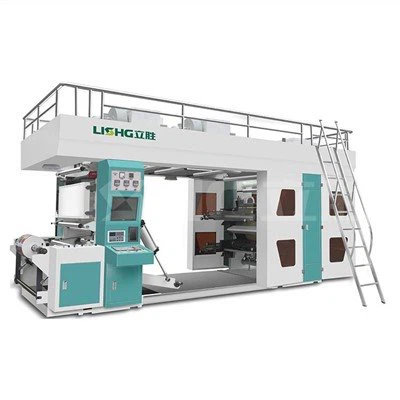
An Inline Flexo Printing Machine is a popular choice for narrow web flexo printing. In this configuration, all printing stations are arranged in a single line, ensuring a compact and efficient setup. Inline Flexo Printing Machines are ideal for short print runs and applications that require fast job changeovers.
A Stack Flexo Printing Machine features multiple print stations stacked vertically. Each station can be dedicated to a specific color or process, allowing for simultaneous printing of multiple colors. Stack Flexo Printing Machines are commonly used for medium to wide web printing, such as flexible packaging and label production.
A Central Impression Flexo Printing Machine utilizes a central impression cylinder to apply pressure to the substrate. The substrate is fed through the press, and each print station comes into contact with the central impression cylinder. This configuration ensures consistent printing pressure, making it suitable for printing on various substrates.
A CI Drum Flexo Printing Machine, also known as a gearless press, features a central impression drum and multiple print stations arranged around it. This configuration allows for precise printing registration, making it ideal for high-quality printing on flexible packaging materials.
A Hybrid Flexo Printing Machine combines flexo printing with other printing technologies, such as digital or offset. This configuration allows for enhanced versatility and flexibility, as different printing methods can be used for specific parts of the printing job. Hybrid Flexo Printing Machines are ideal for applications that require variable data printing or high-resolution graphics.
How Flexo Printing Machines Work?
Preparing the Printing Plates
The basis for effective flexo printing is the printing plates, which are usually manufactured from soft and resilient rubber or flexible photopolymer. During the process of flexo printing, images are separated into a minimum of four process colours - cyan, magenta, yellow, and black - with the option to include spot colours and over varnishes if needed. The plates are essential for the effective transfer of the desired image or text onto the substrate.
Plate Mounting
Once the plates are prepared, they are mounted onto the printing press cylinders, with each colour in the design requiring a separate plate. The mounting process must be meticulously completed to ensure that the colours are precisely aligned, as this will produce accurate and vibrant prints.
Ink Application
The ink is supplied to the printing press through ink chambers or rubber rollers. To control the ink application, anilox rollers are used which have a pattern of tiny cells that carry and deliver a precise amount of ink to the plate surface. By carefully controlling the application of ink, consistent and sharp prints can be achieved.
Substrate Feeding
The substrate, which is usually in the form of rolls of paper or plastic film, is fed into the printing press, passing through various rollers and tension controls to ensure smooth and consistent movement through the press. Controlled feeding is vital to prevent misalignment and ensure the exceptional quality of the final print.
Printing and Image Transfer
As the substrate moves through the press, the inked plates transfer the desired image or text onto it. The pressure applied between the plate and the substrate enables the ink to transfer effectively, creating the final print. This is a highly precise process which makes flexo printing ideal for detailed and high-quality work on a variety of different substrates.
Drying and Curing
Finally, after the ink is transferred to the substrate, it must undergo a drying or curing process to become permanent. Depending on the specific application, drying can be achieved through air drying or by utilising drying systems such as hot air, infrared, ultraviolet (UV), or LED UV technologies. The choice of drying method depends on the type of ink used and the requirements of the final product.
Maintenance of Flexo Printing Machine


Proper care, maintenance, and storage procedures will ensure that your flexo equipment will provide high-quality, defect-free products for many years. It is important to take care of flexo cylinders, plates, and print sleeves to maximize quality use and your bottom line. Some tips for the proper care, maintenance, and storage of your flexo printing equipment include:
Do Not Put Off Cleaning
Be sure to clean print sleeves and cylinders immediately after running a print job. Putting off cleaning even for a short period of time can cause damage to these delicate equipment components as the ink dries quickly and hardens.
Use the Correct Type of Cleaning Solution
Be sure to use the right type of cleaners on your flex so sleeves and plates, as different types of inks are better cleaned with specific types of solutions. Many cleaning processes do not require the use of volatile chemicals. When using water-based inks, a solution of mild soap and water can often do the trick, or isopropyl alcohol can work well for some rubber types of materials. Be sure to rinse well with water. For oil-based, UV-based, or solvent-based inks, use the right type of cleaning solution appropriate for the ink type.
Avoid Abrasive Cleaners and Methods
Flexo print sleeves are quite durable, although they do typically contain soft surfaces which can be damaged by harsh, abrasive cleaners and methods. Abrasion on these delicate surfaces can scrub away the delicate rubber surface of both the photopolymer and elastomer print sleeves. Avoid using abrasive materials, wire, or metal when cleaning flexo image carriers.
Air Dry Sleeves to Prevent Contamination
It might be tempting to wipe your sleeves dry or use an air hose, although either method could contaminate the surface with foreign debris that could negatively affect the quality of your printing. Allowing components to air dry helps to maintain the integrity of the surface.
Prevent UV Exposure During Storage
Make sure that all cleaning solvents are fully evaporated prior to storing. It is recommended to wait at least four hours before storing cleaned plates and sleeves. Wrapping these components in a black-backed film or paper can help to block UV rays and ozone, which could alter the physical properties of this delicate equipment.
Maintain Steady Temperatures During Storage
The temperature during storage conditions can greatly affect flexo printing components. It is important that the storage temperature does not fall below freezing at 32°F, is never hotter than 90°F, and is stored with little to no humidity. Flexo print sleeves can crack if they get too cold. Contraction and expansion due to temperature fluctuations cause serious damage to flexo print sleeves.
Store Sleeves Upright
Always store print sleeves upright and never lay them on the side, which can damage the printing surface. If you must store print sleeves on the side, be sure they are stored properly with a protective cushion to prevent damage.
Frequently Asked Questions
Q: What is Flexo Printing Machine?
Q: How do Flexo Printing Machines work?
Q: What are benefits of Flexo Printing Machine?
Q: What are the main components of a Flexo Printing Machine?
Q: What are the steps of flexography?
Q: What substrate is used in flexo printing?
Q: What types of inks can be used in Flexo Printing Machines?
Q: How do you clean a Flexo Printing Machine?
Q: How do you set up a Flexo Printing Machine for a new printing job?
Q: What are applications of Flexo Printing Machine?
As one of the leading flexo printing machine manufacturers and suppliers in China, we warmly welcome you to buy the newest flexo printing machine at competitive price from our factory. For pricelist and quotation, contact us now.
Food Packaging Printing Machine, film flexo printing machine, multitec flexo machine